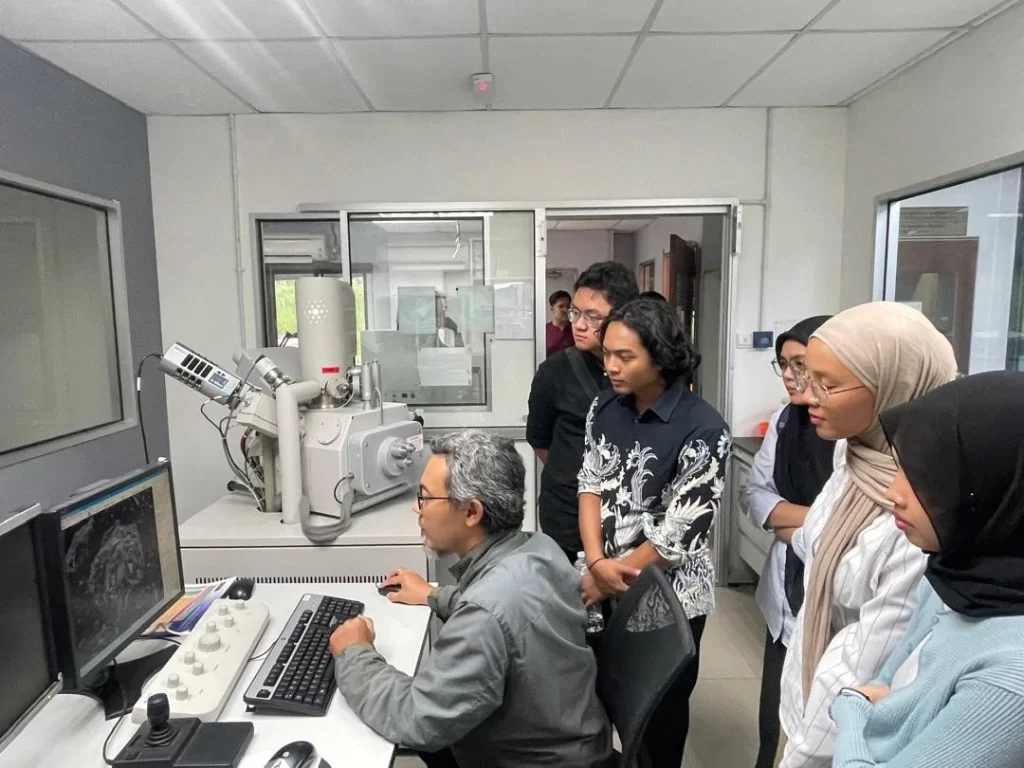
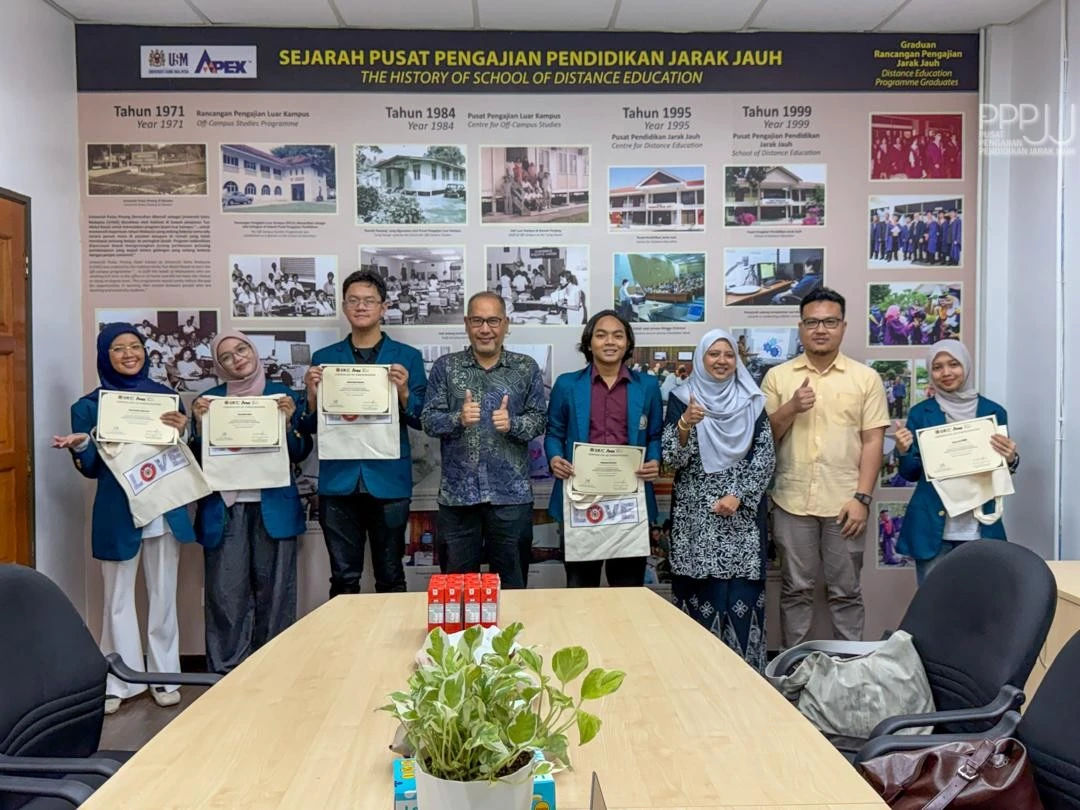
Five students from the Department of Physics, Faculty of Science and Mathematics (FSM), Diponegoro University, participated in the Students Go International World Class University program at the Physics Teaching Laboratory and the School of Distance Education, Universiti Sains Malaysia (USM), from September 15 to 28, 2026. This initiative is part of the Student Go International (SGI) Program organized by the Faculty of Science and Mathematics at Diponegoro University to encourage students to actively engage in international research collaborations during their studies.
The research was conducted under the supervision of Ts. Dr. Nor Zakiah binti Yahaya (USM), following a recommendation from Prof. Dr. Heri Sutanto, S.Si., M.Si., F.Med., from the UNDIP Physics Department. The research focused on developing a microwave absorber (MA) material based on porous activated carbon derived from coconut shells composited with ZnO and NiO. This study addresses the rising risks of electromagnetic interference (EMI) caused by the rapid expansion of wireless devices, creating a need for lightweight, cost-effective, and eco-friendly MA materials—such as porous activated carbon sourced from coconut shell waste. Through this program, the students engaged in direct collaborative research alongside their advisor at USM, synthesized porous activated carbon from Indonesian coconut shells for microwave shielding composite materials, and gained international research experience while building institutional networks between the UNDIP Physics Department and USM.
The activities began on September 16, 2026, with an introduction to research methodology and project planning at the Physics Teaching Laboratory (Room 512). On September 17, the participants fabricated samples and prepared testing procedures, which included synthesizing activated carbon-metal oxide composites via the co-precipitation method and fabricating activated carbon-epoxy composites.
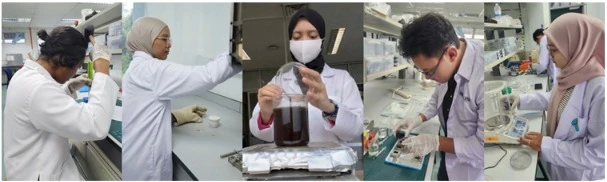
On September 18, the AC/ZnO and AC/NiO samples were pulverized following the drying process, followed by calcination, sample demolding, and sample fabrication. At this stage, releasing the samples from the plate posed a unique challenge. On September 20, the participants prepared the tests and demolded the AC/NiO and AC/ZnO composites. The microwave absorber characterization was subsequently conducted on September 22 at UniMAP, Perlis.
On September 25, the participants presented their research findings and studied Density Functional Theory (DFT). The series of activities concluded on September 28 with a farewell gathering with the Dean of the School of Distance Education at USM, Assoc. Prof. Dr. Zulnaidi Yaacob.
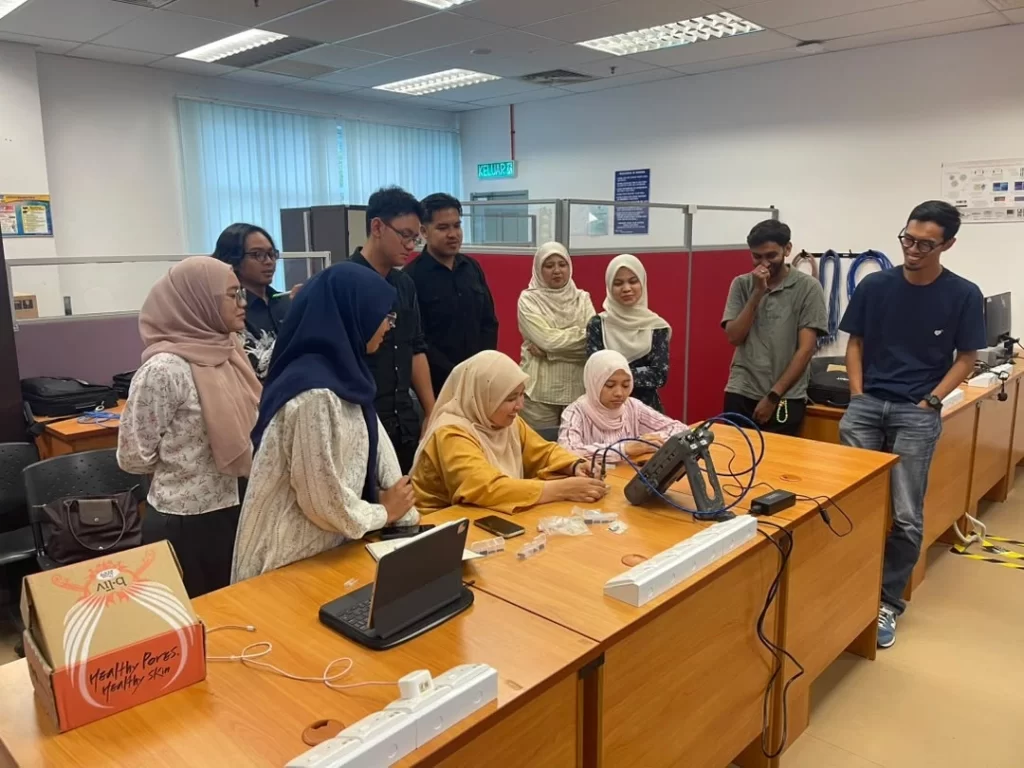
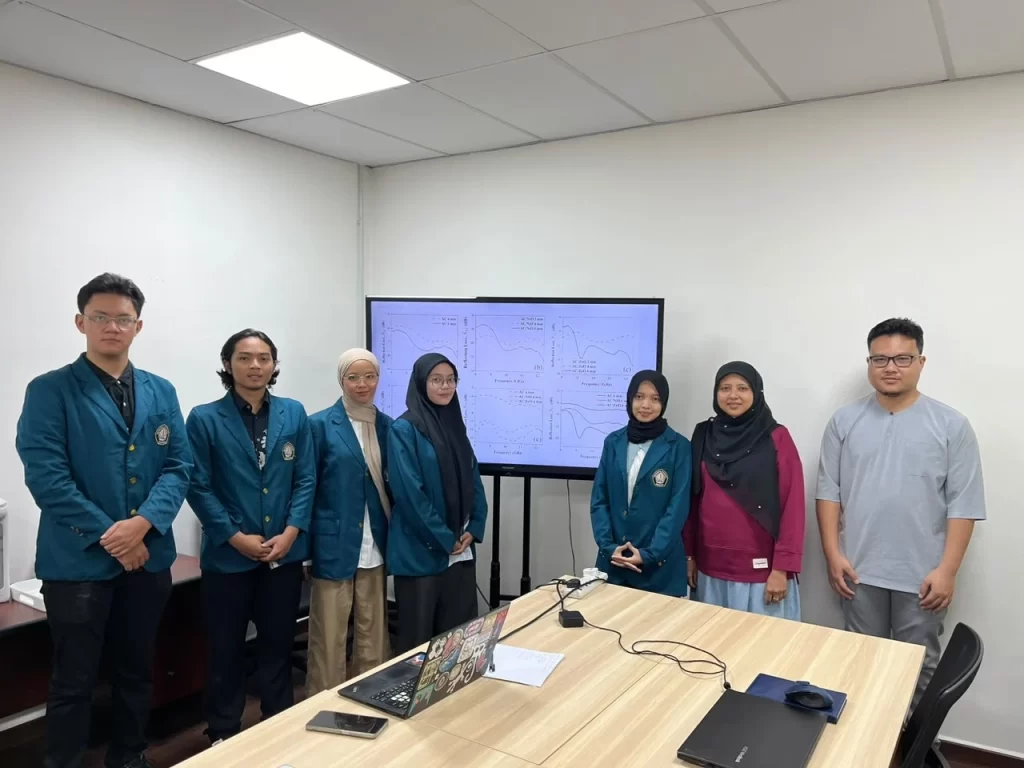
This program successfully produced AC/ZnO and AC/NiO composite samples, as well as characterization and microwave absorber (MA) testing data obtained at UniMAP, Perlis. In addition to gaining research experience, the participants acquired a foundational understanding of computational materials science through Density Functional Theory (DFT) learning. The participating students from UNDIP were Fatma Petaloka Filyal Arafat, Arika Mahda Saputri, Octavia Putri Rahma, Raditya Riyyan Risnandra, and Muhammad Adi Kusuma, supervised by Prof. Dr. Heri Sutanto, S.Si., M.Si., F.Med. (UNDIP) and Ts. Dr. Nor Zakiah binti Yahaya (USM).
Project Execution Team & Contact Persons:
Muhammad Adi Kusuma (muhammadadikusuma@students.undip.ac.id)
Fatma Petaloka Filyal Arafat (fatmapeta@students.undip.ac.id)
Arika Mahda Saputri (arikamahdasaputri@students.undip.ac.id)
Octavia Putri Rahma (octaviaputrirahma@students.undip.ac.id)
Raditya Riyyan Risnandra (radityariyyan@students.undip.ac.id)